
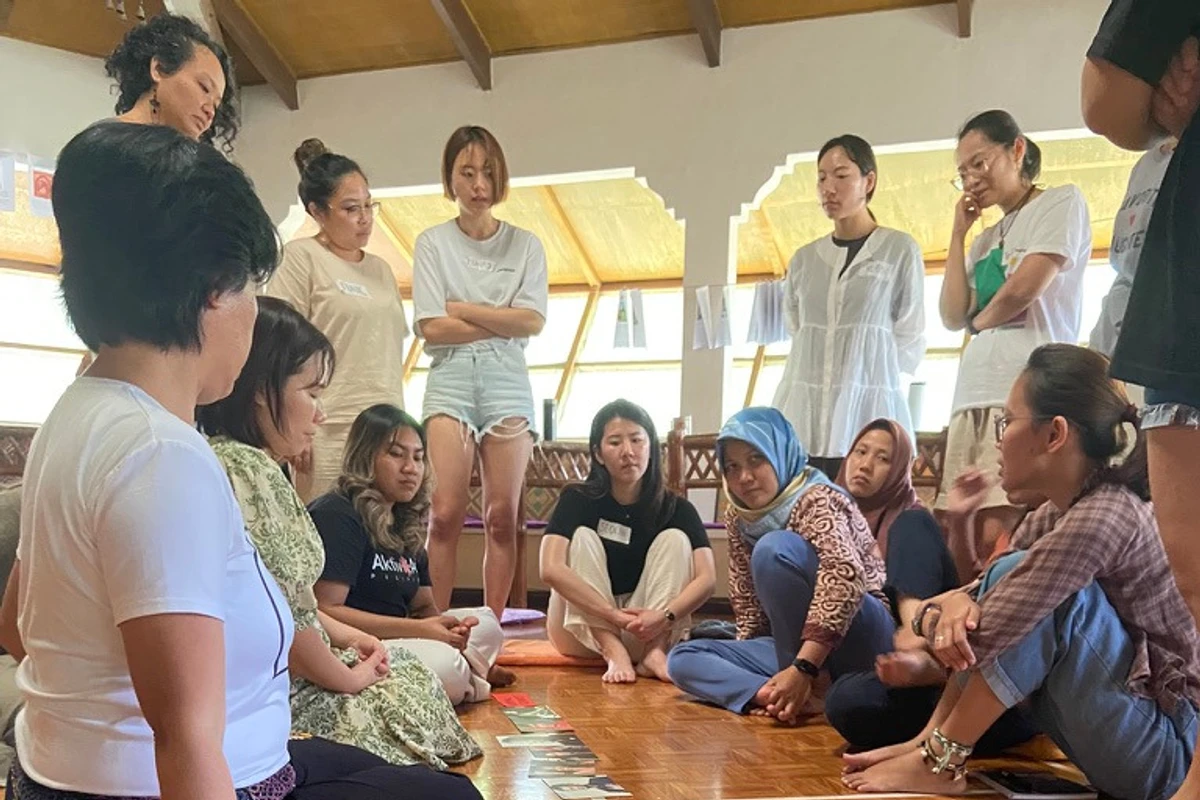
Climate justice movements across Asia are increasingly shaped by feminist leadership— leadership that is grounded in equity, participation, and systemic transformation. Feminist leadership in climate justice challenges dominant, technocratic approaches that often marginalize women, Indigenous peoples, and other vulnerable communities. Rather than treating these groups as victims, feminist approaches position them as agents of change who bring critical knowledge and experience to climate solutions.

Feminist leadership transforms communities—not just individuals
Leadership programs rooted in feminist values have ripple effects beyond individual empowerment. Respondents consistently emphasized that these programs led to collective gains, such as strengthened local organizing, intergenerational mentoring, and policy engagement.
Feminist leadership programs foster self-awareness and collective power
Respondents emphasized that feminist leadership development helped them reflect on their positionality, build confidence in their own voice, and anchor their work in community accountability— not just technical capacity.
Feminist Leadership as Climate Justice
At the core of this leadership model is power redistribution—not only addressing who is affected by climate change, but also who makes decisions about how to respond. Feminist leadership demands that climate policies take into account structural inequalities based on gender, class, ethnicity, and geography, as well as historical injustices like colonialism and land dispossession.